
Quick Demo

Thank you! Your submission has been received!
Oops! Something went wrong while submitting the form.
Blogs
<<
Fintech

The Operational Habits Behind High-Performing Lending Institutions!

Lessons from The 7 Habits of Highly Effective People for Modern Lenders

Modern lending is no longer defined only by how fast institutions can disburse loans. The real differentiator today lies in how effectively lenders operate across underwriting, servicing, collections,compliance, partner management, and borrower engagement. As lending portfolios expand and customer expectations evolve, many financial institutions are realizing that growth alone does not create sustainable lending organizations. Operational discipline does.

Stephen Covey’s timeless book, The 7 Habits of Highly Effective People, was originally written as a framework for personal effectiveness. But when viewed through the lens of modern lending, its principles become surprisingly relevant to financial institutions navigating scale, complexity, operational pressure, and portfolio risk. The habits that make individuals effective are often the same habits that make lending organizations scalable.

Many lending institutions today are extremely busy, but not necessarily effective. Teams spend enormous time managing operational exceptions, manual follow-ups, disconnected workflows, delayed approvals, fragmented servicing systems, and scattered collections visibility. Over time, operational inefficiencies quietly become growth barriers. The institutions that scale effectively are usually not the ones working the hardest. They are the ones operating with stronger structure, visibility, and consistency.

Habit 1: Be Proactive

Anticipating Risk Before It Escalates

The first habit, Be Proactive, becomes highly relevant in lending operations. Many financial institutions still operate reactively. Collections begin only after delinquency rises. Fraud controls become stricter only after losses appear. Operational interventions happen only after turn around time starts increasing. This reactive approach creates instability across the lending lifecycle.

Modern lenders are increasingly shifting toward proactive operational visibility. Instead of waiting for problems to surface, they use early borrower behavior indicators, workflow intelligence, and risk monitoring mechanisms to identify operational gaps before they escalate into portfolio stress. Proactive lending is becoming one of the defining characteristics of scalable financial institutions.

The same principle applies directly to lenders. Institutions that depend entirely on external market conditions often struggle during volatility. Institutions with stronger operational visibility adapt faster because they understand their portfolios better.

Habit 2: Begin With the End in Mind

Designing Lending Around Long-Term Portfolio Quality

The second habit, Begin With the End in Mind,reflects one of the biggest shifts happening in modern lending today. Many institutions still optimize only for loan disbursement volumes. But sustainable lenders design operations around long-term portfolio quality. They understand that a lending journey does not end at approval. Every onboarding workflow,underwriting decision, servicing interaction, repayment structure, and collections process contributes toward the long-term health of the portfolio.

The strongest lending organizations design operations by asking strategic questions early.

1. Will the product remainscalable when volumes increase?
2. Can servicing teams maintain visibility as theportfolio grows?
3. Will collections remain structured across geographies and branches?
4. Can audit readiness be maintained while expanding operations?


Institutions that think beyond immediate disbursement volumes often create stronger operational resilience. In lending, weak operational design eventually creates execution problems. Strong operational design creates repeatable growth.

Habit 3: Put First Things First

Building Operational Discipline Before Aggressive Scale

The third habit, Put First Things First, addresses one of the biggest operational realities in lending today: distraction.Financial institutions are under constant pressure to launch new products, increase sourcing, improve turn-around time, and expand into new markets. But when growth becomes the only priority, operational foundations often weakensilently underneath.

Institutions that scale successfully prioritize operational discipline before aggressive expansion. They focus on standardizing workflows,improving visibility, structuring approval hierarchies, strengthening audit trails, and reducing operational dependency on manual coordination. Operational consistency eventually becomes more valuable than short-term speed.

This is especially important in modern digital lending environments where multiple stakeholders are involved simultaneously. Dealers, branches, sourcing partners, credit teams, operations, servicing, and collections all require coordination. Without operational structure, lending organizations eventually lose control over efficiency and portfolio visibility.

Habit 4: Think Win-Win

Building Lending Relationships Beyond Transactions

The fourth habit, Think Win-Win, becomes increasingly important as lending shifts from transactional relationships toward long-term borrower engagement. Traditional lending models often focused only on disbursement and recovery. But digital borrowers today expect transparency, faster communication, structured servicing, and smoother repayment experiences.

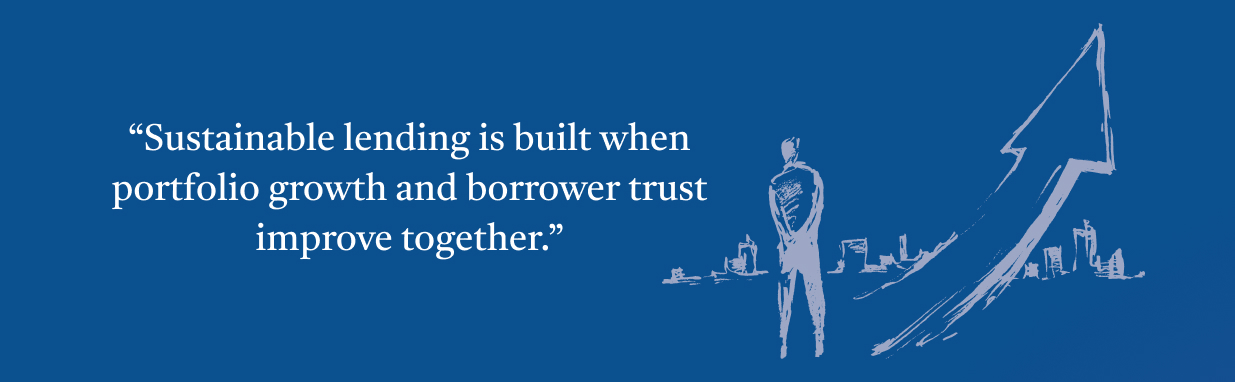
Strong lending organizations understand that sustainable lending cannot be built only through aggressive collections orrapid growth targets. Portfolio quality improves when borrower relationships improve. This is especially visible across MSME lending, Vehicle Finance, Gold loans, and Microfinance segments where borrower trust directly influences repayment behavior and long-term retention.


The same philosophy increasingly applies to collections and servicing operations. Institutions focused only on recovery pressure often damage long-term customer value. Institutions focused on balanced borrower engagement create stronger and more sustainable lending ecosystems.


Habit 5: Seek First to Understand

Moving Beyond Credit Scores Toward Borrower Intelligence

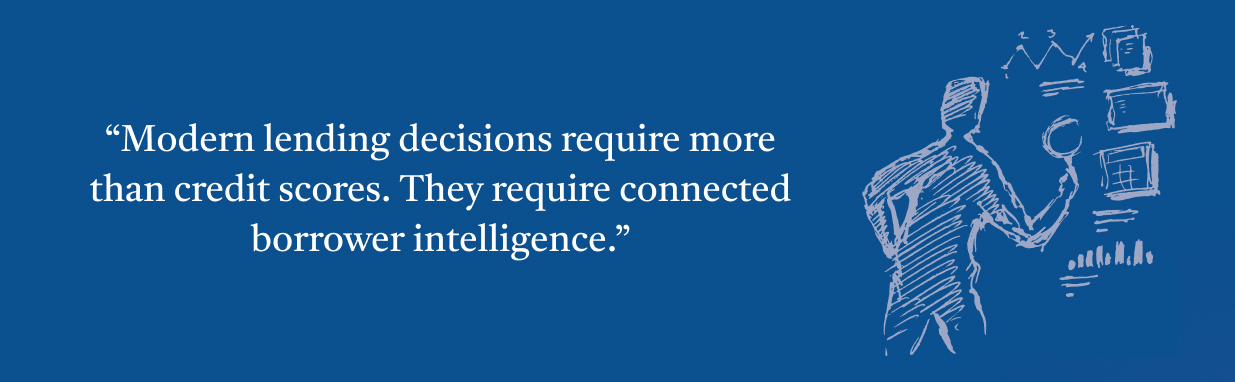
The fifth habit, Seek First to Understand, reflectsthe evolution happening in modern credit assessment. Lending is increasinglymoving beyond static scorecards and traditional underwriting models. Borrowerbehavior, repayment patterns, transaction intelligence, servicing interactions,and operational activity are becoming critical risk indicators.

Institutions are learning that disconnected systems reduceborrower understanding. When sourcing, underwriting, servicing, and collectionsoperate separately, lenders lose operational context around borrower behavior.This often creates inconsistent decisions and weaker portfolio intelligence.

The future of lending increasingly depends onconnected intelligence rather than isolated decision-making. Institutions thatimprove operational visibility across the entire lending lifecycle are oftenbetter positioned to improve both underwriting quality and collections performance.


Many lending systems today still evaluate borrowers only through predefinedtemplates rather than understanding broader behavioral context. The institutions that improve decision intelligence will ultimately improve portfolio quality.


Habit 6: Synergize

Connecting Teams, Systems, and Lending Operations

The sixth habit, Synergize, perhaps represents one ofthe most important lessons for modern lending organizations. Fragmentation remains one of the largest operational problems across the lending industry.Credit teams use separate systems. Operations teams depend on spreadsheets. Collections operate independently. Partner onboarding lacks visibility. Reporting often becomes manual reconciliation between departments.

This fragmentation slows decision-making, increases operational dependency, and weakens portfolio visibility. Modern lending organizations are increasingly focusing on connecting origination, servicing, collections, analytics, compliance, and partner ecosystems into one operational environment.

When operations become unified, institutions gain faster turnaround time, stronger portfolio visibility, improved compliance monitoring,and better borrower experience. Technology should not simply digitize individual tasks. It should unify operational decision-making across the lending lifecycle.

Habit 7: Sharpen the Saw

Continuously Modernizing Lending Operations

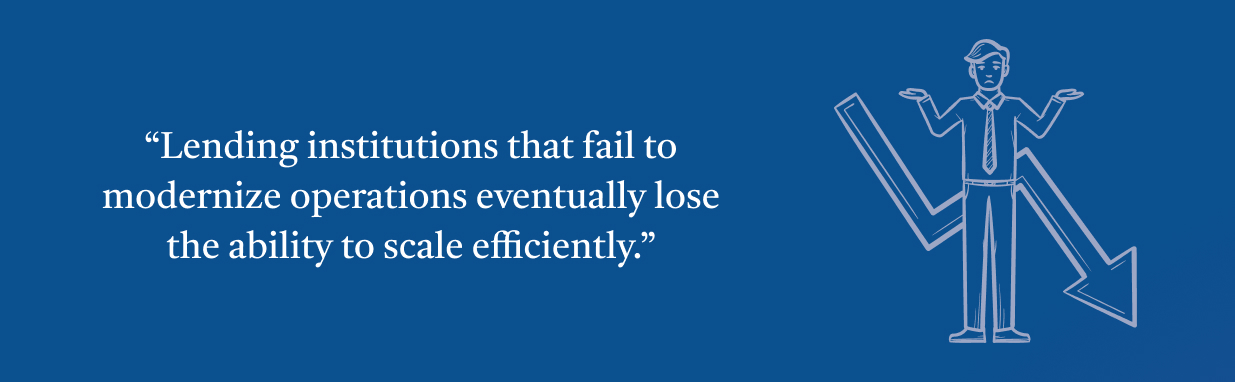
The final habit, Sharpen the Saw, reflects the growing importance of continuous modernization in lending operations. Many financial institutions delay modernization until operational pressure becomes unavoidable. But scalable lenders continuously improve their technology infrastructure, workflows, integrations, and decision frameworks.

The lending ecosystem is changing rapidly through embedded finance, AI-assisted underwriting, digital onboarding, API-driven integrations,co-lending partnerships, and data-driven collections intelligence. Institutions that fail to modernize gradually lose operational flexibility and struggle toscale efficiently.

Modernization today is no longer only about upgrading software. It is about strengthening operational resilience. The lenders that will lead the next decade are the ones building systems that improve visibility, consistency, borrower engagement, operational discipline, andscalability simultaneously.

Final Thoughts

The future of lending will not be defined only by who lends faster. It will be defined by who operates better.

The lending organizations that will lead the next decade arethe ones building operational habits that improve visibility, consistency, borrower engagement, operational discipline, and scalability across the lendinglifecycle.

As lending ecosystems become more connected and competitive, institutions will increasingly require unified operational infrastructure that supports not just growth, but sustainable growth.

Platforms like AllCloudare helping lenders move toward this model by unifying Origination, Servicing, Collections, Analytics, and Partner-led lending operations into one connected ecosystem.

Because in modern lending, effectiveness is no longer just a leadership principle. It is an operational advantage.

Latest

No items found.

The Operational Habits Behind High-Performing Lending Institutions!

Get In Touch
Thank you! Your submission has been received!
Oops! Something went wrong while submitting the form.

Heading 1

Heading 2

Heading 3

Heading 4

Heading 5
Heading 6

Lorem ipsum dolor sit amet, consectetur adipiscing elit, sed do eiusmod tempor incididunt ut labore et dolore magna aliqua. Ut enim ad minim veniam, quis nostrud exercitation ullamco laboris nisi ut aliquip ex ea commodo consequat. Duis aute irure dolor in reprehenderit in voluptate velit esse cillum dolore eu fugiat nulla pariatur.

Block quote

Ordered list

  1. Item 1
  2. Item 2
  3. Item 3

Unordered list

  • Item A
  • Item B
  • Item C
Text link

Bold text

Emphasis

Superscript

Subscript

Lessons from The 7 Habits of Highly Effective People for Modern Lenders

Modern lending is no longer defined only by how fast institutions can disburse loans. The real differentiator today lies in how effectively lenders operate across underwriting, servicing, collections,compliance, partner management, and borrower engagement. As lending portfolios expand and customer expectations evolve, many financial institutions are realizing that growth alone does not create sustainable lending organizations. Operational discipline does.

Stephen Covey’s timeless book, The 7 Habits of Highly Effective People, was originally written as a framework for personal effectiveness. But when viewed through the lens of modern lending, its principles become surprisingly relevant to financial institutions navigating scale, complexity, operational pressure, and portfolio risk. The habits that make individuals effective are often the same habits that make lending organizations scalable.

Many lending institutions today are extremely busy, but not necessarily effective. Teams spend enormous time managing operational exceptions, manual follow-ups, disconnected workflows, delayed approvals, fragmented servicing systems, and scattered collections visibility. Over time, operational inefficiencies quietly become growth barriers. The institutions that scale effectively are usually not the ones working the hardest. They are the ones operating with stronger structure, visibility, and consistency.

Habit 1: Be Proactive

Anticipating Risk Before It Escalates

The first habit, Be Proactive, becomes highly relevant in lending operations. Many financial institutions still operate reactively. Collections begin only after delinquency rises. Fraud controls become stricter only after losses appear. Operational interventions happen only after turn around time starts increasing. This reactive approach creates instability across the lending lifecycle.

Modern lenders are increasingly shifting toward proactive operational visibility. Instead of waiting for problems to surface, they use early borrower behavior indicators, workflow intelligence, and risk monitoring mechanisms to identify operational gaps before they escalate into portfolio stress. Proactive lending is becoming one of the defining characteristics of scalable financial institutions.

The same principle applies directly to lenders. Institutions that depend entirely on external market conditions often struggle during volatility. Institutions with stronger operational visibility adapt faster because they understand their portfolios better.

Habit 2: Begin With the End in Mind

Designing Lending Around Long-Term Portfolio Quality

The second habit, Begin With the End in Mind,reflects one of the biggest shifts happening in modern lending today. Many institutions still optimize only for loan disbursement volumes. But sustainable lenders design operations around long-term portfolio quality. They understand that a lending journey does not end at approval. Every onboarding workflow,underwriting decision, servicing interaction, repayment structure, and collections process contributes toward the long-term health of the portfolio.

The strongest lending organizations design operations by asking strategic questions early.

1. Will the product remainscalable when volumes increase?
2. Can servicing teams maintain visibility as theportfolio grows?
3. Will collections remain structured across geographies and branches?
4. Can audit readiness be maintained while expanding operations?


Institutions that think beyond immediate disbursement volumes often create stronger operational resilience. In lending, weak operational design eventually creates execution problems. Strong operational design creates repeatable growth.
Habit 3: Put First Things First

Building Operational Discipline Before Aggressive Scale

The third habit, Put First Things First, addresses one of the biggest operational realities in lending today: distraction.Financial institutions are under constant pressure to launch new products, increase sourcing, improve turn-around time, and expand into new markets. But when growth becomes the only priority, operational foundations often weakensilently underneath.

Institutions that scale successfully prioritize operational discipline before aggressive expansion. They focus on standardizing workflows,improving visibility, structuring approval hierarchies, strengthening audit trails, and reducing operational dependency on manual coordination. Operational consistency eventually becomes more valuable than short-term speed.

This is especially important in modern digital lending environments where multiple stakeholders are involved simultaneously. Dealers, branches, sourcing partners, credit teams, operations, servicing, and collections all require coordination. Without operational structure, lending organizations eventually lose control over efficiency and portfolio visibility.

Habit 4: Think Win-Win

Building Lending Relationships Beyond Transactions

The fourth habit, Think Win-Win, becomes increasingly important as lending shifts from transactional relationships toward long-term borrower engagement. Traditional lending models often focused only on disbursement and recovery. But digital borrowers today expect transparency, faster communication, structured servicing, and smoother repayment experiences.

Strong lending organizations understand that sustainable lending cannot be built only through aggressive collections orrapid growth targets. Portfolio quality improves when borrower relationships improve. This is especially visible across MSME lending, Vehicle Finance, Gold loans, and Microfinance segments where borrower trust directly influences repayment behavior and long-term retention.


The same philosophy increasingly applies to collections and servicing operations. Institutions focused only on recovery pressure often damage long-term customer value. Institutions focused on balanced borrower engagement create stronger and more sustainable lending ecosystems.


Habit 5: Seek First to Understand

Moving Beyond Credit Scores Toward Borrower Intelligence

The fifth habit, Seek First to Understand, reflectsthe evolution happening in modern credit assessment. Lending is increasinglymoving beyond static scorecards and traditional underwriting models. Borrowerbehavior, repayment patterns, transaction intelligence, servicing interactions,and operational activity are becoming critical risk indicators.

Institutions are learning that disconnected systems reduceborrower understanding. When sourcing, underwriting, servicing, and collectionsoperate separately, lenders lose operational context around borrower behavior.This often creates inconsistent decisions and weaker portfolio intelligence.

The future of lending increasingly depends onconnected intelligence rather than isolated decision-making. Institutions thatimprove operational visibility across the entire lending lifecycle are oftenbetter positioned to improve both underwriting quality and collections performance.


Many lending systems today still evaluate borrowers only through predefinedtemplates rather than understanding broader behavioral context. The institutions that improve decision intelligence will ultimately improve portfolio quality.

Habit 6: Synergize

Connecting Teams, Systems, and Lending Operations

The sixth habit, Synergize, perhaps represents one ofthe most important lessons for modern lending organizations. Fragmentation remains one of the largest operational problems across the lending industry.Credit teams use separate systems. Operations teams depend on spreadsheets. Collections operate independently. Partner onboarding lacks visibility. Reporting often becomes manual reconciliation between departments.

This fragmentation slows decision-making, increases operational dependency, and weakens portfolio visibility. Modern lending organizations are increasingly focusing on connecting origination, servicing, collections, analytics, compliance, and partner ecosystems into one operational environment.

When operations become unified, institutions gain faster turnaround time, stronger portfolio visibility, improved compliance monitoring,and better borrower experience. Technology should not simply digitize individual tasks. It should unify operational decision-making across the lending lifecycle.

Habit 7: Sharpen the Saw

Continuously Modernizing Lending Operations

The final habit, Sharpen the Saw, reflects the growing importance of continuous modernization in lending operations. Many financial institutions delay modernization until operational pressure becomes unavoidable. But scalable lenders continuously improve their technology infrastructure, workflows, integrations, and decision frameworks.

The lending ecosystem is changing rapidly through embedded finance, AI-assisted underwriting, digital onboarding, API-driven integrations,co-lending partnerships, and data-driven collections intelligence. Institutions that fail to modernize gradually lose operational flexibility and struggle toscale efficiently.

Modernization today is no longer only about upgrading software. It is about strengthening operational resilience. The lenders that will lead the next decade are the ones building systems that improve visibility, consistency, borrower engagement, operational discipline, andscalability simultaneously.
Tags
VEHICLE FINANCE
AUTO FINANCE
Great Place to Work Certified Nov 2025-Nov 2026 INDIA