.png)
Silver Loans in India: The Next Big Shift in Secured Lending (and the Software You Need to Scale It)

Get In Touch

Heading 1
Heading 2
Heading 3
Heading 4
Heading 5
Heading 6
Lorem ipsum dolor sit amet, consectetur adipiscing elit, sed do eiusmod tempor incididunt ut labore et dolore magna aliqua. Ut enim ad minim veniam, quis nostrud exercitation ullamco laboris nisi ut aliquip ex ea commodo consequat. Duis aute irure dolor in reprehenderit in voluptate velit esse cillum dolore eu fugiat nulla pariatur.
Block quote
Ordered list
- Item 1
- Item 2
- Item 3
Unordered list
- Item A
- Item B
- Item C
Bold text
Emphasis
Superscript
Subscript
Gold has long been the default collateral for small-ticket secured credit in India. Silver is now joining it. Since RBI brought lending against silver jewellery and coins into a harmonised framework, banks and NBFCs can offer silver loans in a regulated, standardised way.
This guide covers how silver loans work, what the rules require, where the market is heading, and why lenders need purpose-built silver loan software to run the product at scale.
What is a silver loan?
A silver loan is a short-term secured loan where the borrower pledges silver jewellery, ornaments or coins to a bank or NBFC in exchange for credit. As with gold loans, the lender holds the collateral until the loan is repaid or settled.
It suits people who hold silver at home and need quick liquidity but don't want to sell it. In Indian households, silver is bought as an auspicious asset, gifted at weddings, and acquired at festivals like Diwali. That makes it widely held, especially in northern and western India.
Why lenders are paying attention now
The idea isn't new. Lenders had thought about silver loans while building gold loan businesses, but regulation wasn't in favour. Once RBI's consolidated directions on lending against gold and silver collateral arrived, the segment opened up.
A lender who has launched silver loans described the opportunity in a recent industry conversation:
- Silver is a natural fit for Indian households. Almost every home has some, whether traditional pieces or newer purchases.
- It's an early-days market. Ticket sizes are small, much like gold loans in the early 2000s when prices were low. Gold has since become a premium product, and not every player wants to commit to small-ticket lending.
- It can reach lower-to-middle-income borrowers. Gold loans mostly serve medium to upper-income families. Silver can put formal credit in the hands of people who couldn't afford gold.
- The informal market is large. In smaller towns, local jewellers and moneylenders already lend against silver, often at very high interest rates and without a proper auction process or any assurance the item will be returned. Formalising this protects borrowers.
- It's best suited to Tier 2 to Tier 4 and rural markets, more than to metros.
Within the early set of lenders, loans are already being issued every day.

The RBI rules lenders must follow
The RBI (Lending Against Gold and Silver Collateral) Directions, 2025 set the framework, with compliance due by April 1, 2026. The key points for silver:
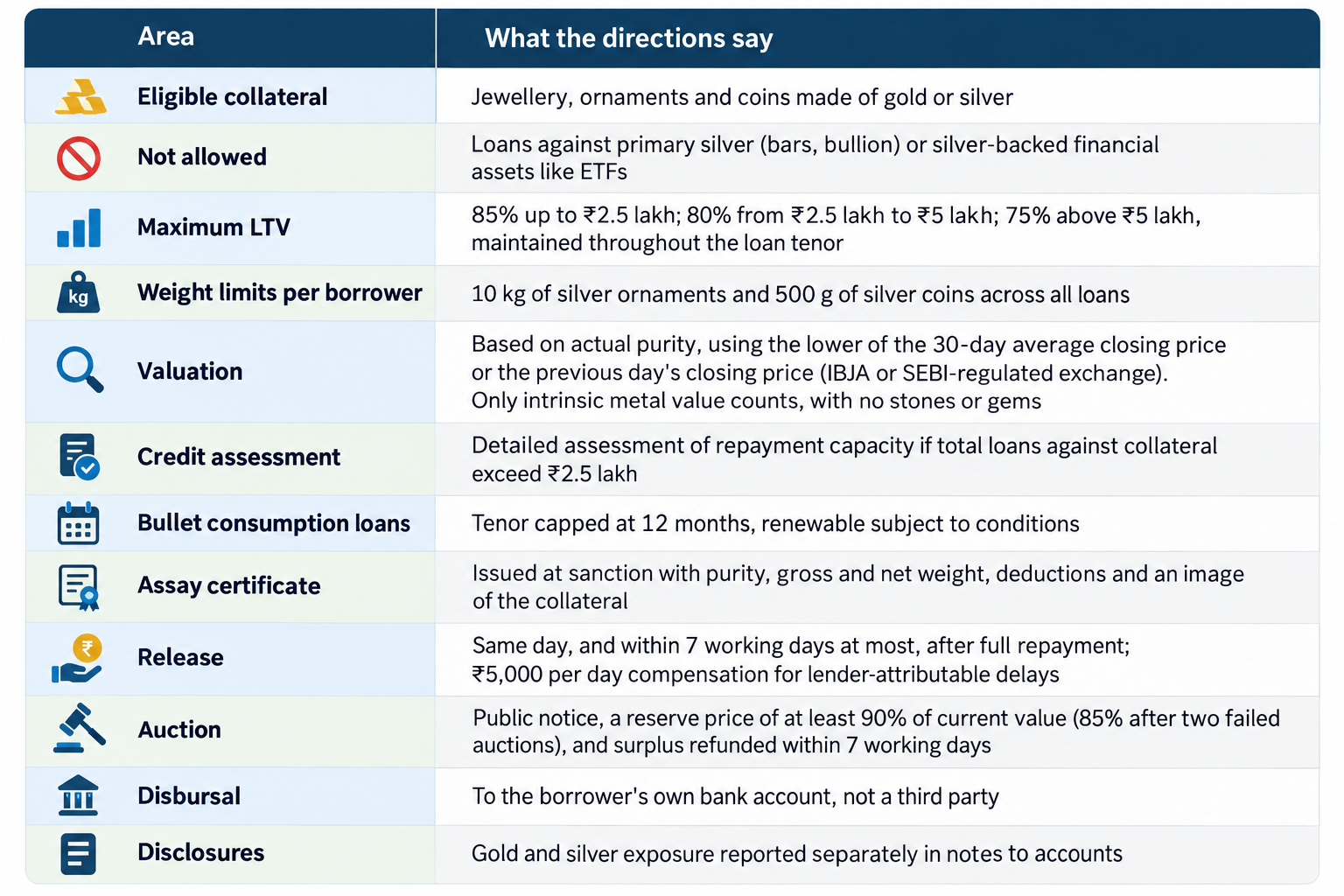
Lenders also have to standardise assay and documentation across branches, communicate in the borrower's language, and put loans on a clear audit trail. Please read the original RBI notification before building your policy.
What makes silver loans operationally different
Silver is not just "gold with a different price". As that lender pointed out, the differences are practical:
- Testing takes a bit longer. Silver is currently checked by machine, taking roughly 7 to 8 minutes versus about 5 for gold.
- More items per loan. Silver pieces are lower in value, so a branch handles more items and more loans for the same disbursal volume.
- Smaller tickets mean thinner margins. Efficiency per loan matters far more than it does in higher-ticket lending.
- Valuation is volatile and rule-bound. The lower-of-two-prices rule and the continuous LTV requirement mean collateral value needs constant tracking.
Together these make manual processes and spreadsheets unworkable beyond a handful of branches.
.svg)